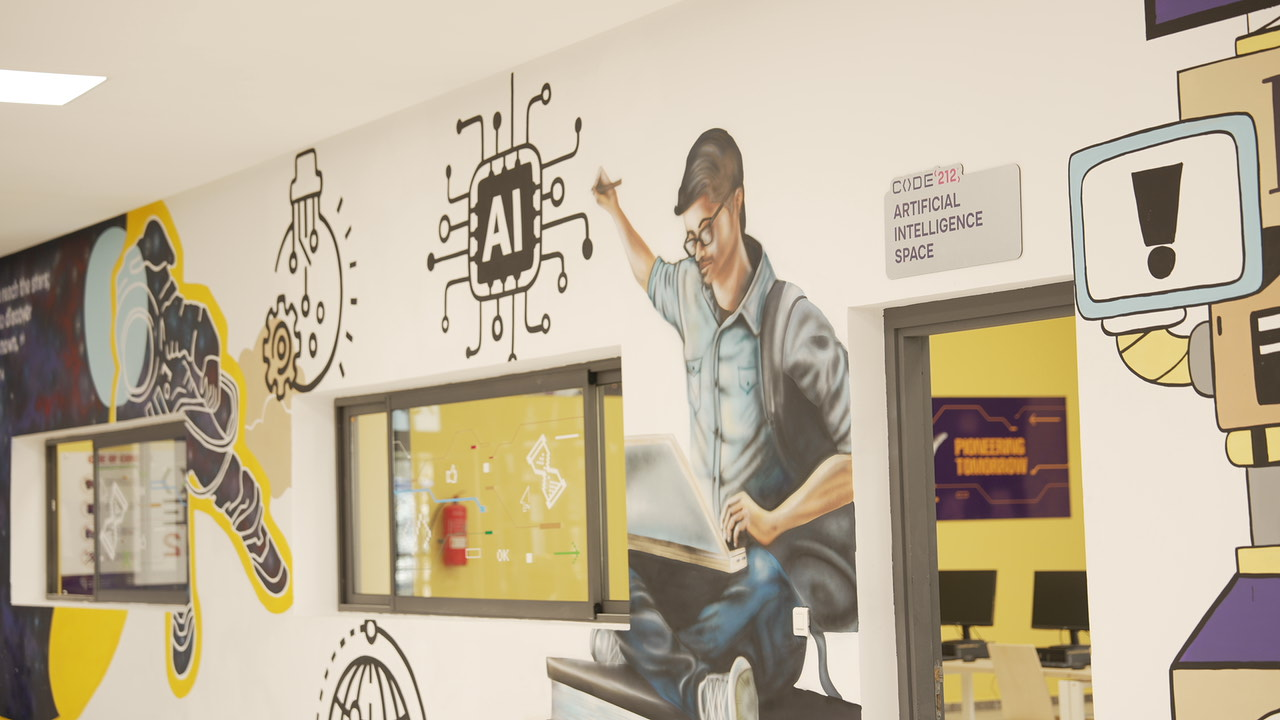
Code 212 is not just a digital training center, it is the expression of a vision. Initially launched as part of a national initiative to strengthen digital skills across Moroccan universities, the program found its first and most transformative implementation at Ibn Tofail University. Here, it was redefined beyond its initial purpose. Instead of focusing solely on teaching coding or artificial intelligence, the university shaped Code 212 into a space where technology becomes a tool for inclusion, sustainability, and real-world problem solving.
At the heart of this transformation lies a clear understanding: access to technology must be universal. Code 212 opens its doors to all students, especially those traditionally excluded from technological pathways, students from non-scientific disciplines, rural areas, low-income backgrounds, as well as international students and students with disabilities. By removing financial barriers and offering free, structured training, the center ensures that digital skills are no longer a privilege, but a shared opportunity. What makes this model powerful is not only who enters the space, but what they become inside it.
Inspired by the identity of Ibn Tofail University as a green and unified campus, Code 212 rethinks how digital education is delivered. Learning does not happen in isolation from the environment, it is shaped by it. Within this space, artificial intelligence, coding, and robotics are not taught as abstract skills, but as tools to understand and respond to environmental and societal challenges. Students do not simply learn how systems work; they are encouraged to ask how these systems can improve the world around them.
This approach comes to life through a dynamic ecosystem of student engagement. The center has become a platform where clubs organize conferences, workshops, and masterclasses, including initiatives led by international students that focus on employability, digital integration, and professional readiness. It is also a space where ideas evolve into action. Projects are developed, refined, and pitched within the center, often addressing sustainability challenges such as resource management, agriculture, and environmental monitoring. At the same time, the presence of professors and researchers transforms these activities into a continuous loop between learning, experimentation, and knowledge production.
Powered By EmbedPress