Date: April 13–14, 2026
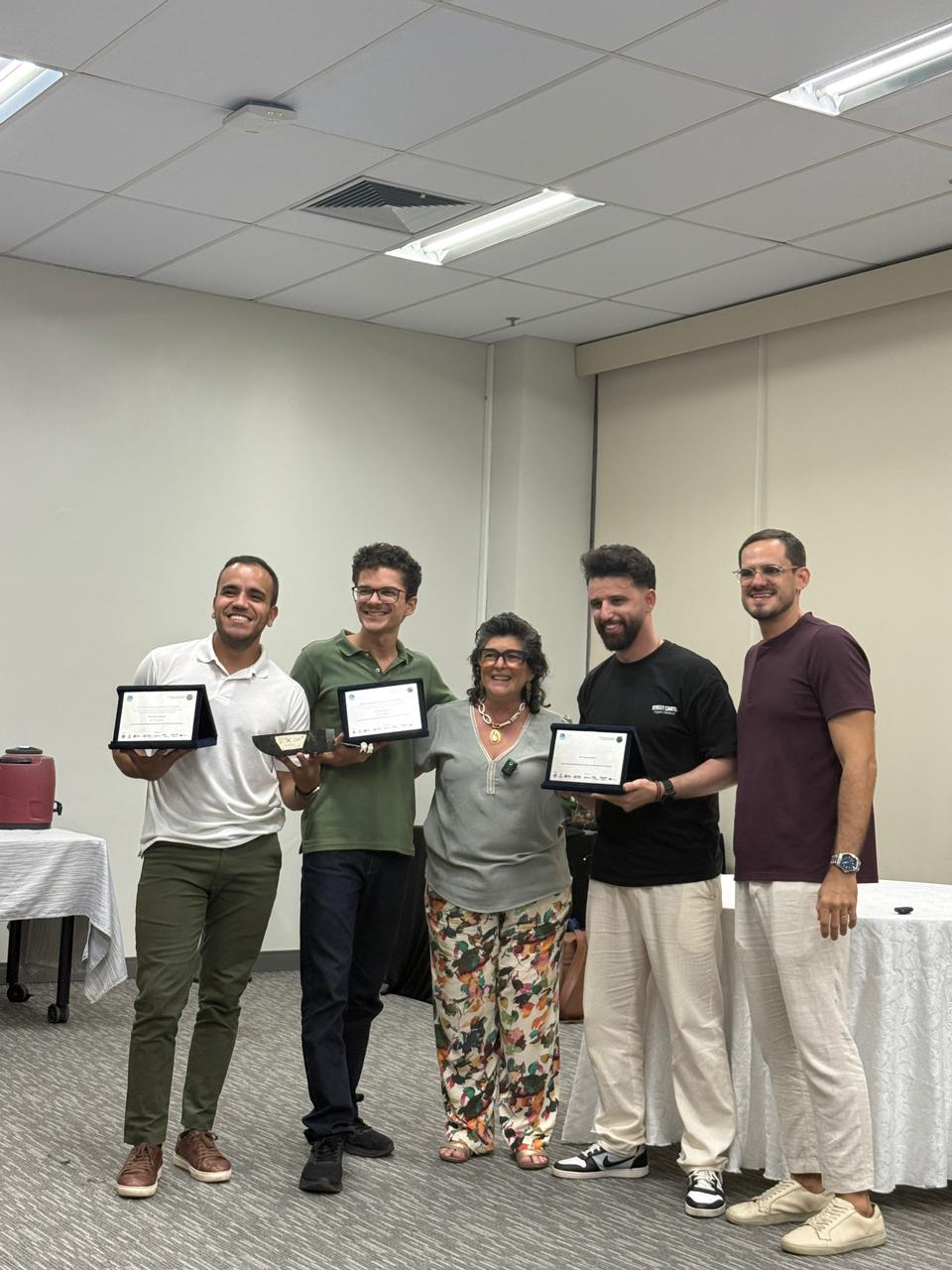
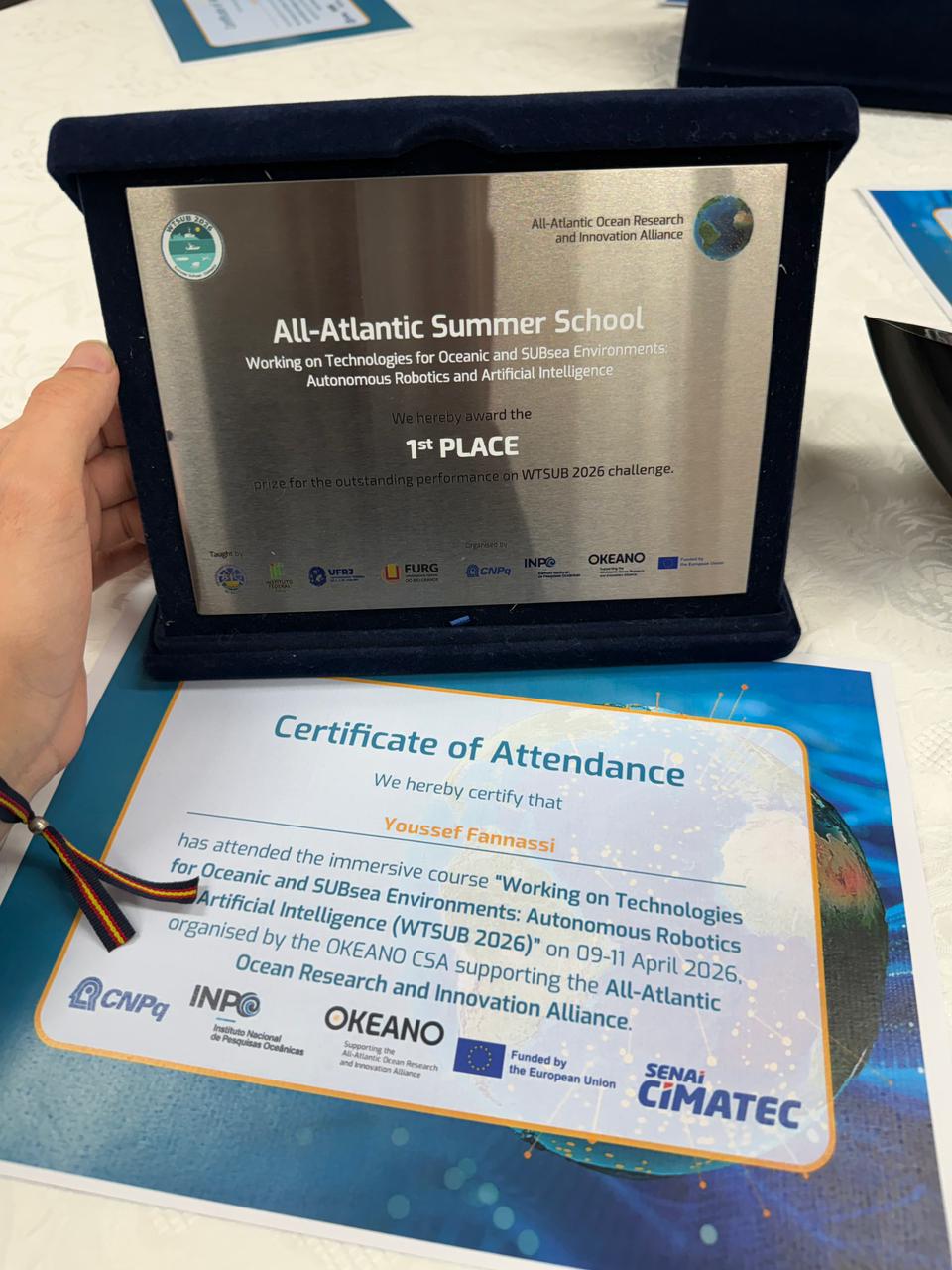
Marine sustainability, ocean innovation, and environmental technologies were at the heart of the All-Atlantic Intergenerational Hackathon 2026, an international scientific event that brought together researchers, innovators, engineers, and early-career ocean professionals from across the Atlantic region in Salvador de Bahia, Brazil. Within this highly competitive international environment, doctoral student Youssef Fannassi, affiliated with the Laboratory of Natural Resources and Sustainable Development at the Faculty of Sciences of Ibn Tofail University, was awarded the First Prize in Marine Robotics for an innovative project dedicated to the exploration and preservation of marine ecosystems. Supervised by Professor Aicha Ben Mohammadi, he distinguished himself through a project positioned at the intersection of marine sustainability, intelligent technologies, and environmental innovation.
Organized on April 13 and 14, 2026, the hackathon formed part of the activities of the All-Atlantic Ocean Research and Innovation Alliance (AAORIA), an international alliance promoting scientific cooperation between countries bordering the Atlantic Ocean in the fields of marine research, climate resilience, sustainable development, and technological innovation. Hosted under the Brazilian presidency of the alliance, the event transformed Salvador de Bahia into a dynamic space of scientific exchange and collaborative problem-solving focused on the future of oceans and coastal ecosystems.
Far from the traditional format of academic conferences or technology competitions, the All-Atlantic Intergenerational Hackathon was designed as an immersive collaborative experience where participants worked collectively to develop practical and implementable responses to real environmental challenges affecting marine ecosystems. Approximately 67 Early Career Ocean Professionals (ECOPs), accompanied by researchers, mentors, engineers, and innovation specialists from multiple countries and scientific disciplines, took part in the initiative.
Throughout the two-day program, participants engaged in collaborative workshops, mentoring sessions, scientific discussions, and prototype development activities structured around rapid innovation and interdisciplinary cooperation. Teams exchanged expertise, explored emerging technological approaches, and worked intensively to transform scientific ideas into concrete solutions capable of supporting more sustainable interactions with marine environments. The event created an environment where technological creativity and scientific knowledge were directly connected to urgent global environmental priorities.
The themes explored during the hackathon reflected some of the most pressing issues currently shaping international discussions on ocean sustainability. Participants worked on challenges related to digital innovation for coastal resilience, low-cost technologies for ocean observation, sustainable fisheries and aquaculture, digital ocean mapping, monitoring of invasive sargassum proliferation, and educational innovation linked to ocean literacy and Blue Schools.
Advanced technologies occupied a central place throughout the event. Robotics, artificial intelligence, autonomous systems, and intelligent environmental sensing technologies were explored as strategic tools capable of improving marine ecosystem monitoring, strengthening scientific observation, and supporting environmental preservation efforts. This scientific orientation was reinforced by the broader ecosystem surrounding the event, particularly through the “WTSUB 2026” Summer School dedicated to technologies for oceanic and subsea environments, autonomous robotics, and artificial intelligence.
Within this highly international and technologically demanding context, the project presented by Youssef Fannassi stood out through its contribution to the exploration and preservation of marine ecosystems using marine robotics. The distinction obtained in the marine robotics category highlights both the scientific relevance of the project and its innovative technological dimension. In the context of the hackathon themes, the innovation aligns with emerging international approaches that increasingly rely on intelligent and autonomous technologies to observe marine biodiversity, monitor environmental conditions, access difficult underwater environments, and support more sustainable ocean management practices.
The significance of this achievement extends beyond the award itself. Marine robotics has become one of the rapidly evolving fields within environmental and oceanic sciences, particularly as marine ecosystems face increasing pressures linked to climate change, pollution, biodiversity degradation, and coastal vulnerability. Autonomous technologies are now considered essential tools for collecting environmental data, improving scientific observation, and enabling more sustainable forms of marine exploration and ecosystem monitoring.
For the participants, the hackathon also represented an important moment of learning, exchange, and international collaboration. Young researchers and innovators were exposed to new technological perspectives, interdisciplinary approaches, and emerging discussions surrounding sustainable ocean governance and innovation-driven environmental solutions. The experience offered participants the opportunity to strengthen international scientific connections, engage directly with experts from different Atlantic regions, and contribute actively to global conversations surrounding the future of oceans and sustainable technologies.