
Event: 2–3 June 2026
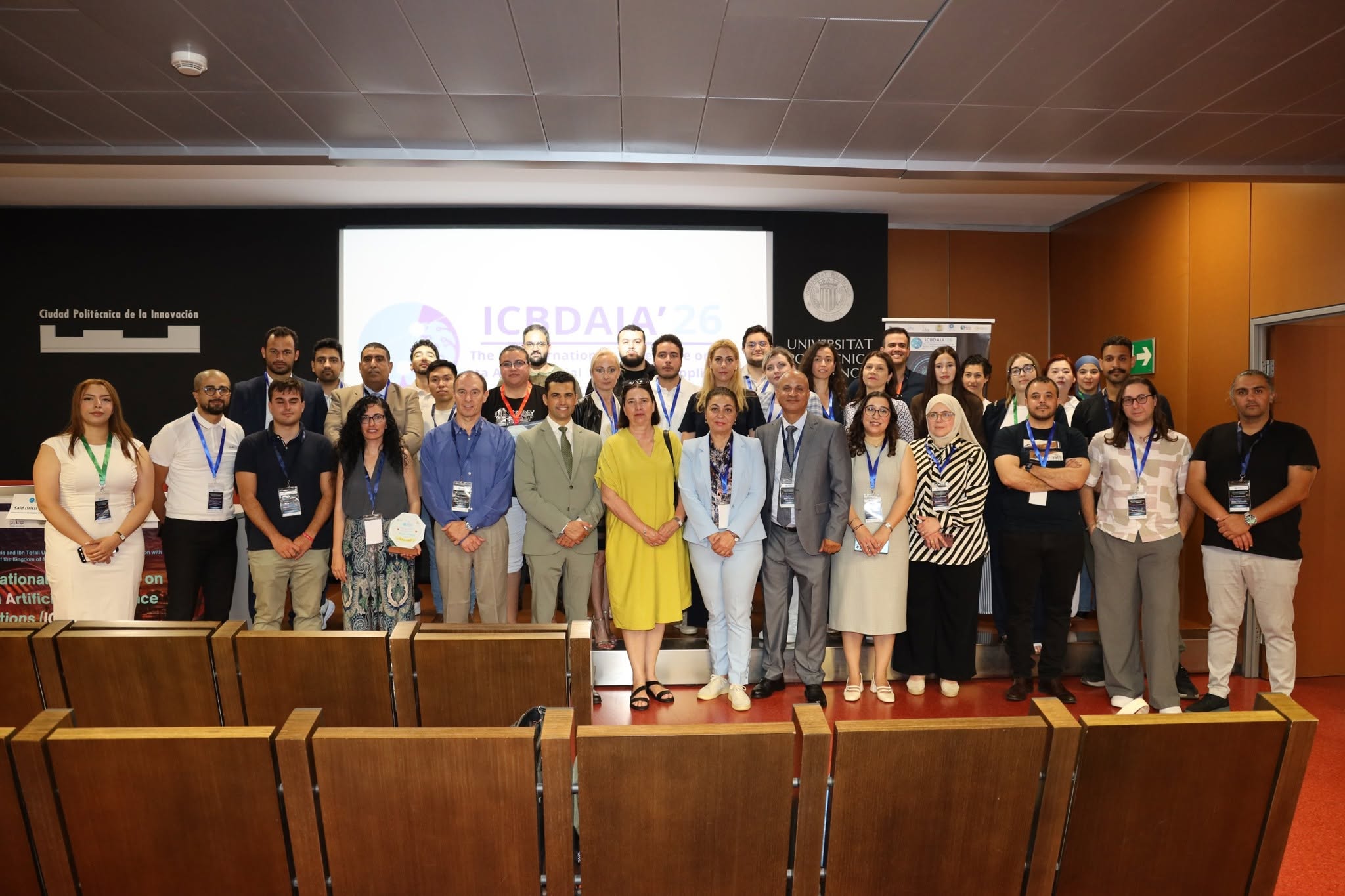
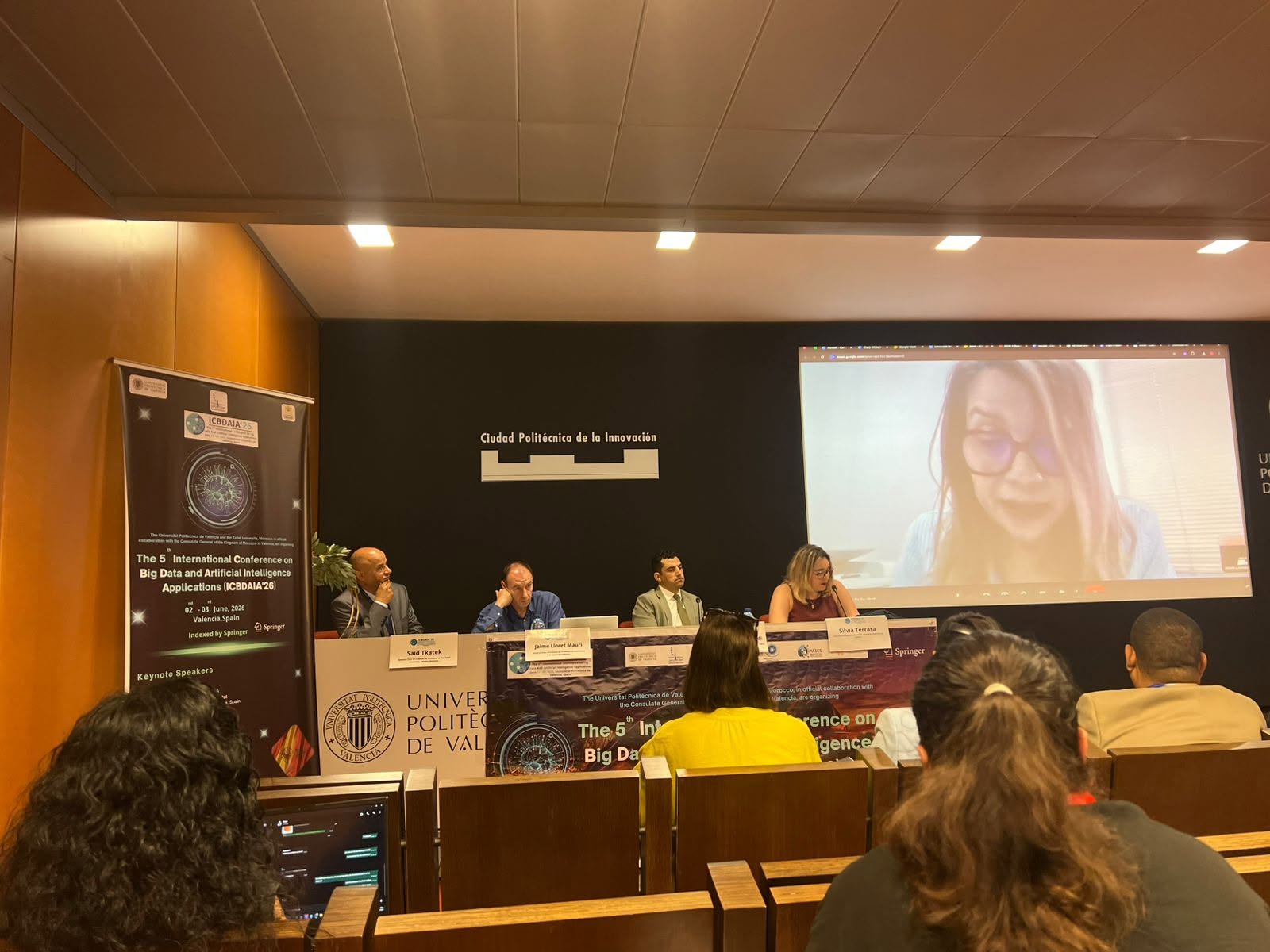
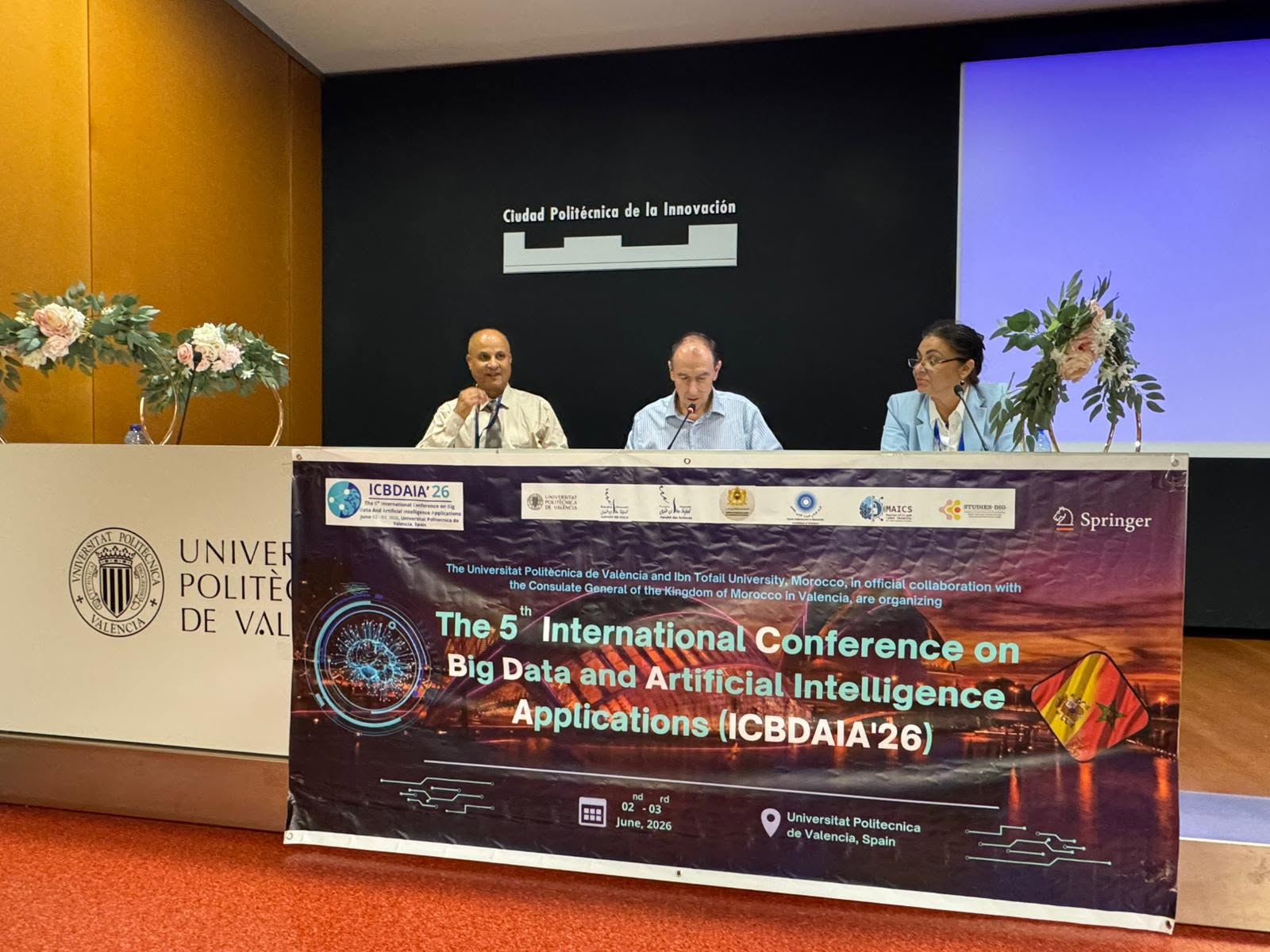
As artificial intelligence becomes embedded in increasingly complex scientific and operational environments, attention is shifting from technological capability alone to the effective use of data-driven methods across disciplines and sectors. This intersection between computational advances and practical application framed the 5th International Conference on Big Data and Artificial Intelligence Applications (ICBDAIA’26), held on 2–3 June 2026 at Universitat Politècnica de València (UPV), Spain, with in-person and virtual participation.
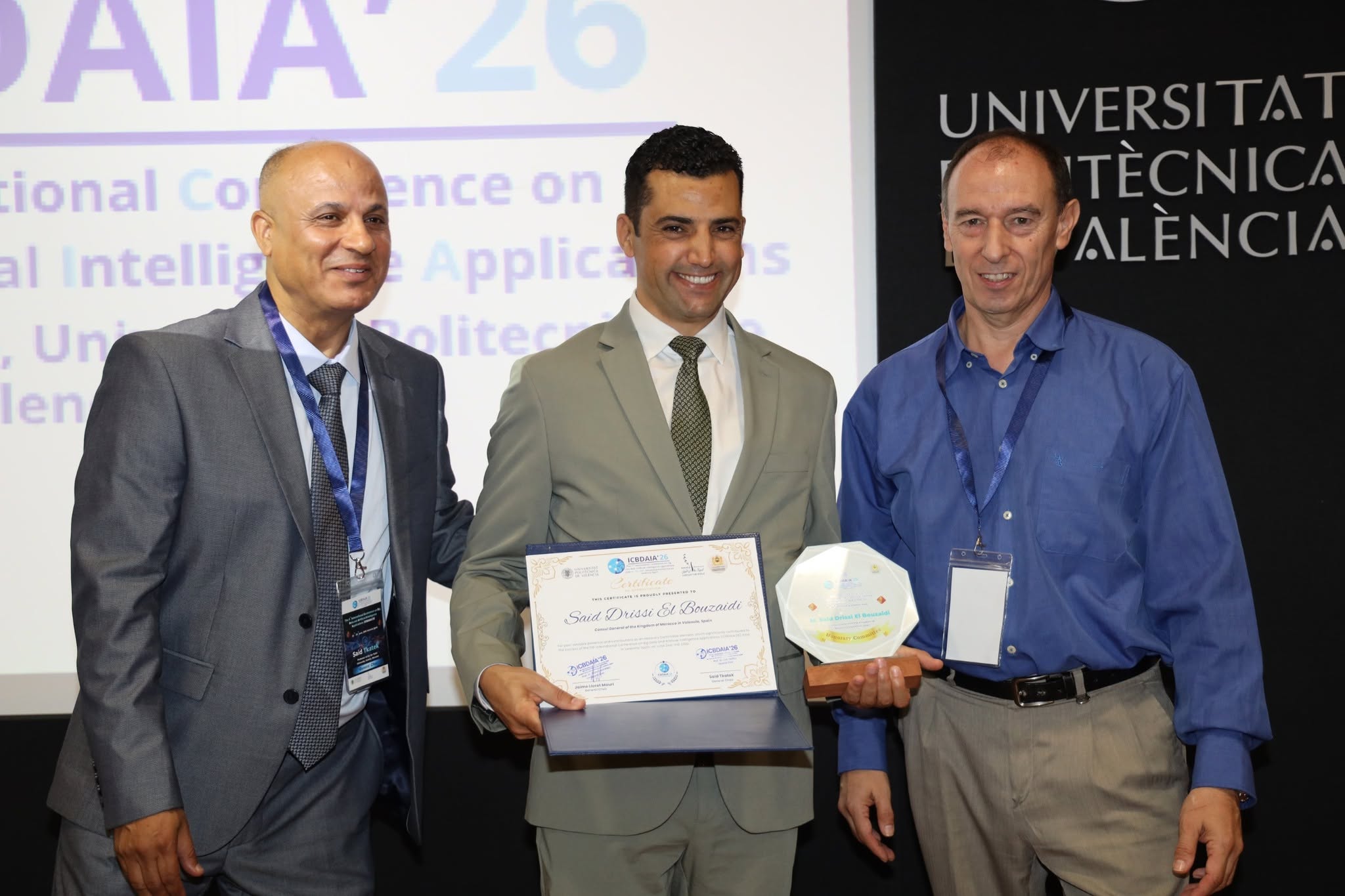
The Valencia edition was organized by Universitat Politècnica de València, the Faculty of Sciences of Ibn Tofail University, and its Master’s in Artificial Intelligence & Cybersecurity, in collaboration with the Consulate General of the Kingdom of Morocco in Valencia and the Saharan Moroccan Association for Science and Artificial Intelligence (ASMSIA). Prof. Jaime Lloret Mauri of UPV and Prof. Said Tkatek of Ibn Tofail University served as General Chairs, with researchers from the university also contributing to the conference’s technical committee.
The scientific programme placed AI and Big Data in direct relation to the environments in which they are increasingly used. Alongside deep learning, natural language processing, computer vision, the Internet of Things, cybersecurity and blockchain, the conference addressed applications in smart agriculture and irrigation, environmental and climate analysis, water management, healthcare and medical diagnostics, energy, bioinformatics, smart cities, logistics and economic activities. This breadth connected computational methods with concrete questions of resource management, diagnosis, automation, connectivity and data-supported decision-making.
The discussions also reflected the challenges that emerge as these technologies move into wider use. Environmental and agricultural data, connected devices, intelligent systems and digital infrastructures create new possibilities for analysis and automation, while simultaneously raising questions of optimization, integration and cybersecurity. By placing these subjects within the same programme, ICBDAIA’26 linked technological development with the practical contexts in which AI and Big Data solutions must operate.
Scientific exchange took place through keynote speeches, technical sessions, panels and research presentations, bringing researchers, practitioners and industry experts into the same forum. Original papers submitted to the conference were reviewed by at least two members of the scientific programme committee. Accepted, registered and presented papers were designated for publication in Springer’s Lecture Notes in Networks and Systems (LNNS), connecting conference discussion with formal scientific dissemination.
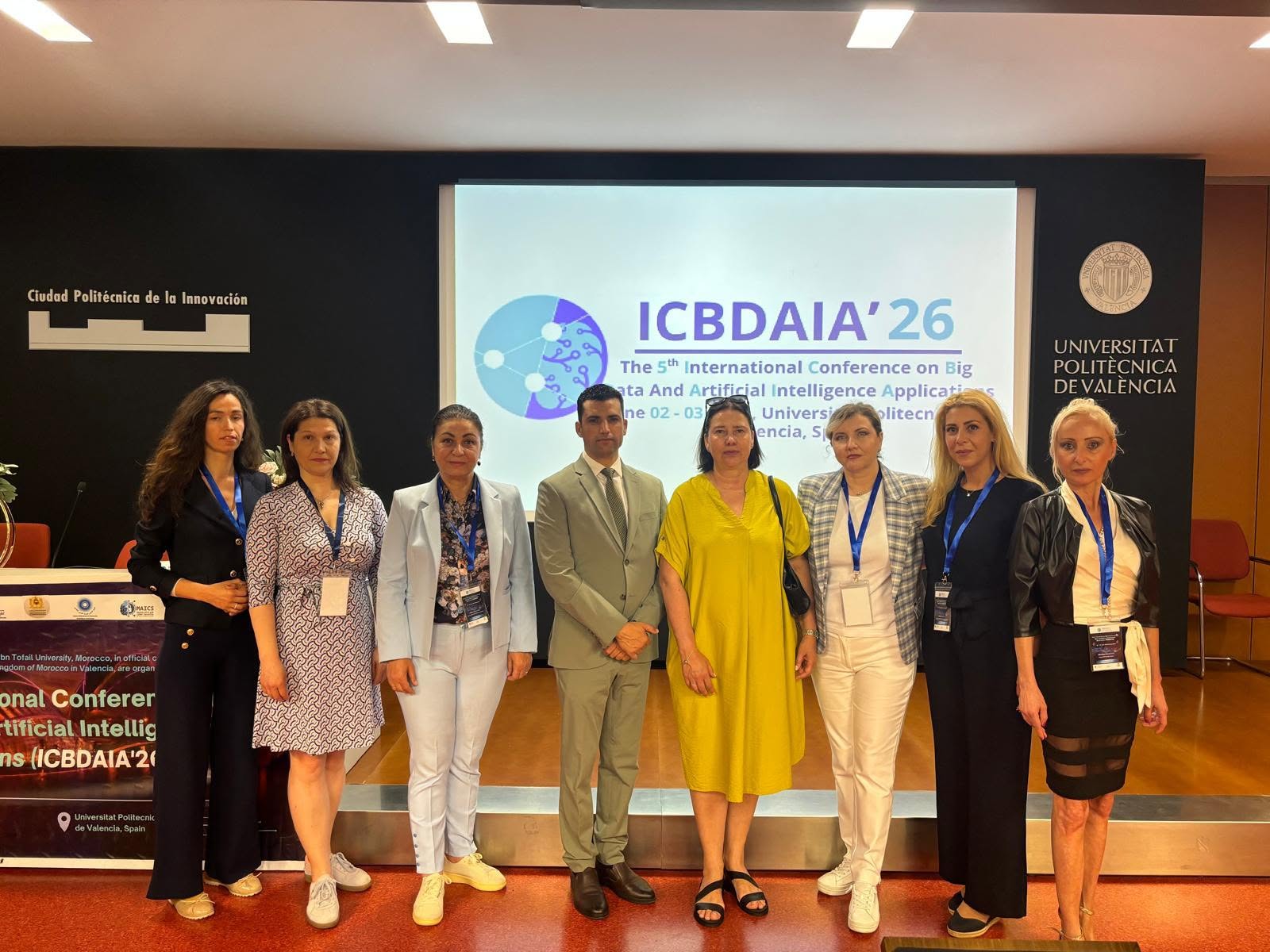
The Valencia meeting also intersected with the STUDIES-DIG research network. Researchers from the University of National and World Economy (UNWE), Bulgaria, participated through the project, which brings together 14 academic and non-academic partners from six countries, including Ibn Tofail University. UNWE reported that the meeting contributed to consolidating existing partnerships and establishing new contacts with universities and scientific organizations working in AI, Big Data and digital technologies.
The collaboration continues beyond the 2026 meeting. Following previous ICBDAIA editions held in Kénitra and Laayoune, the conference series is moving to Sofia, Bulgaria, for its sixth edition in 2027, with UNWE and Ibn Tofail University continuing their cooperation within STUDIES-DIG. The successive editions allow the scientific work and institutional connections developed around ICBDAIA to continue across different academic settings.