
Across the world, agriculture is facing a growing crisis. Farmers are expected to produce more with fewer resources, under increasing pressure from climate change, water scarcity, and soil degradation. Yet the technologies designed to support them remain largely inaccessible, often costing between $10,000 and $25,000 and functioning as fragmented systems rather than integrated solutions. The result is a global paradox: innovation exists, but those who need it most cannot access it. This gap continues to drive inefficiency, crop losses of up to 40%, and excessive reliance on water and chemical inputs.
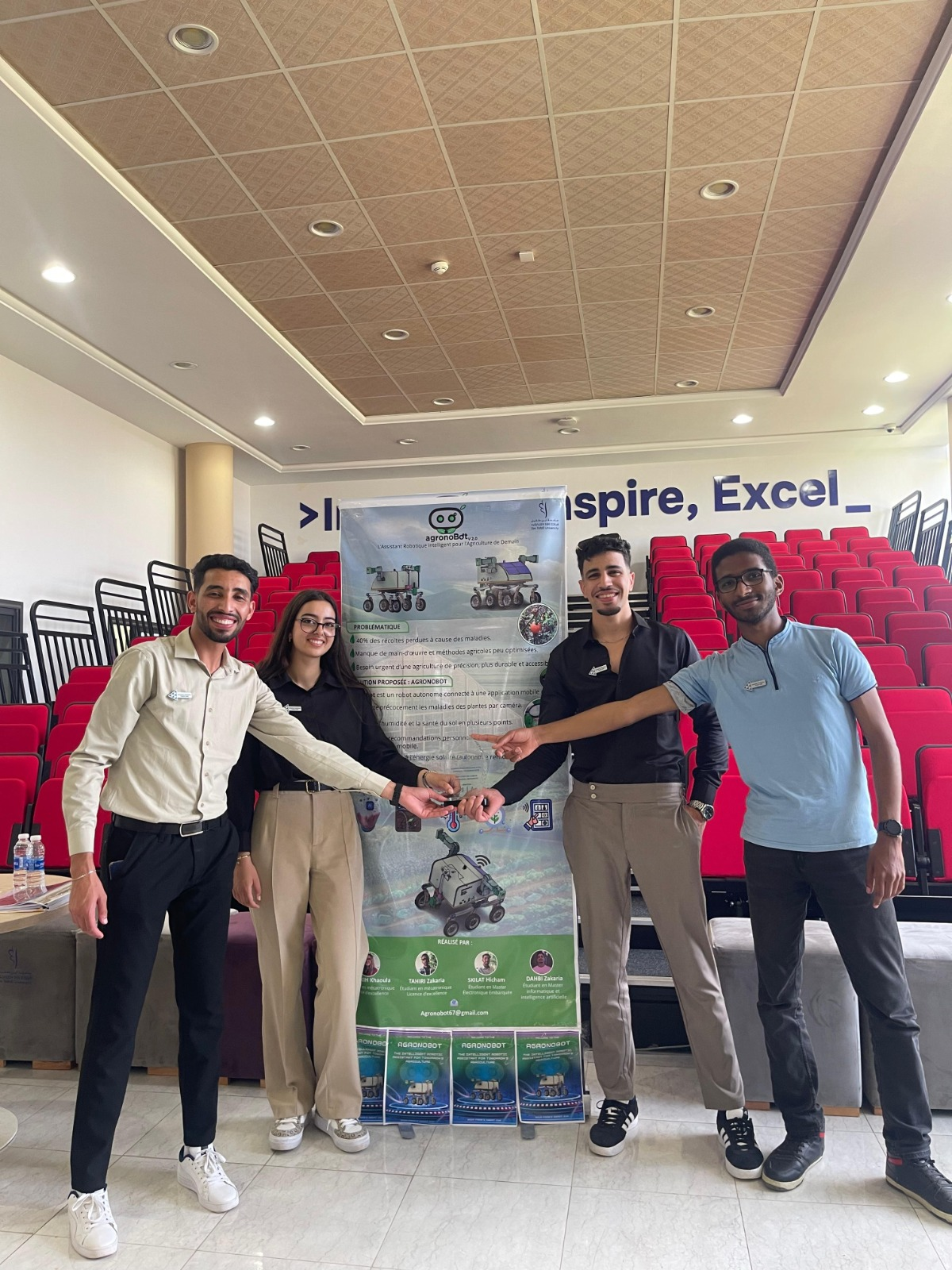
AgronoBot was born as a response to this challenge, not in isolation, but through direct engagement with the field. Developed by a multidisciplinary student team, the initiative was shaped through interaction with farmers, transforming real constraints into design opportunities. This approach redefined student engagement, moving beyond academic learning toward active problem-solving. Students did not simply study agricultural challenges; they immersed themselves in them, co-creating a solution grounded in reality and driven by purpose.
At its core, AgronoBot is an integrated precision agriculture system that combines artificial intelligence, IoT sensors, and robotics into a single, accessible platform. It performs multiple functions simultaneously, including early detection of plant diseases, continuous monitoring of environmental conditions, and real-time communication with users through a mobile application. By consolidating these functions into one system, AgronoBot eliminates the fragmentation that characterizes existing technologies, reducing both cost and complexity while making innovation practical and usable in real-world conditions.
The impact of this approach is both measurable and transformative. The system demonstrates the potential to reduce water consumption by up to 30%, decrease pesticide use by 50%, and mitigate crop losses by up to 40%. Beyond these figures, it enables a critical shift from reactive to preventive agriculture, where decisions are guided by data rather than uncertainty. Farmers engaged in the process have already begun adopting more efficient and targeted practices, improving productivity while reducing environmental impact and operational strain.
More than a technological innovation, AgronoBot represents a new model for how change can happen. Initiated by a small team, the project has evolved into a broader ecosystem connecting students, farmers, and innovation platforms. It shows that impactful solutions do not depend on scale at the start, but on the ability to connect knowledge with real needs. By bridging the gap between advanced technology and accessibility, AgronoBot offers a scalable, inclusive, and globally relevant approach to sustainable agriculture, one that has the potential to redefine how innovation reaches those who need it most.
Powered By EmbedPress