
Event: 15 April 2026
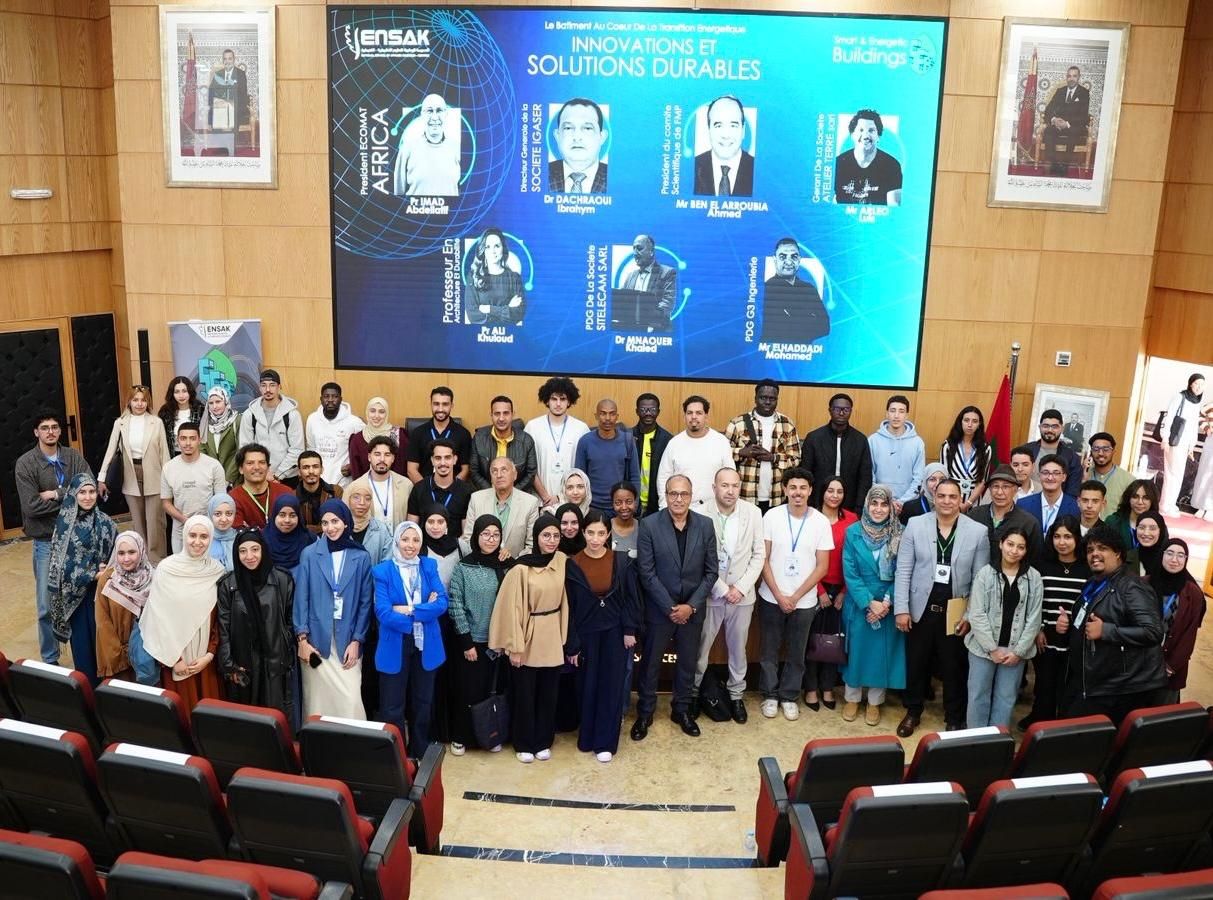
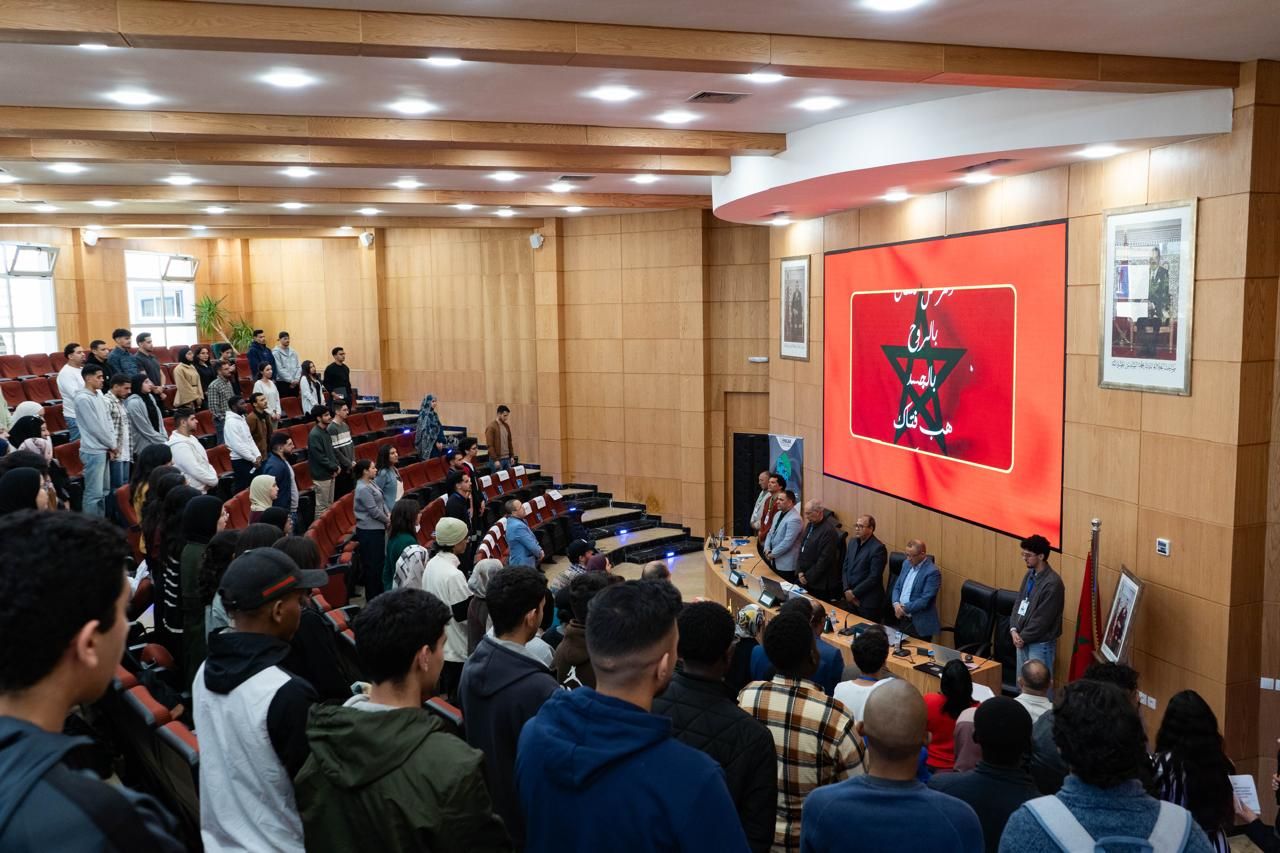
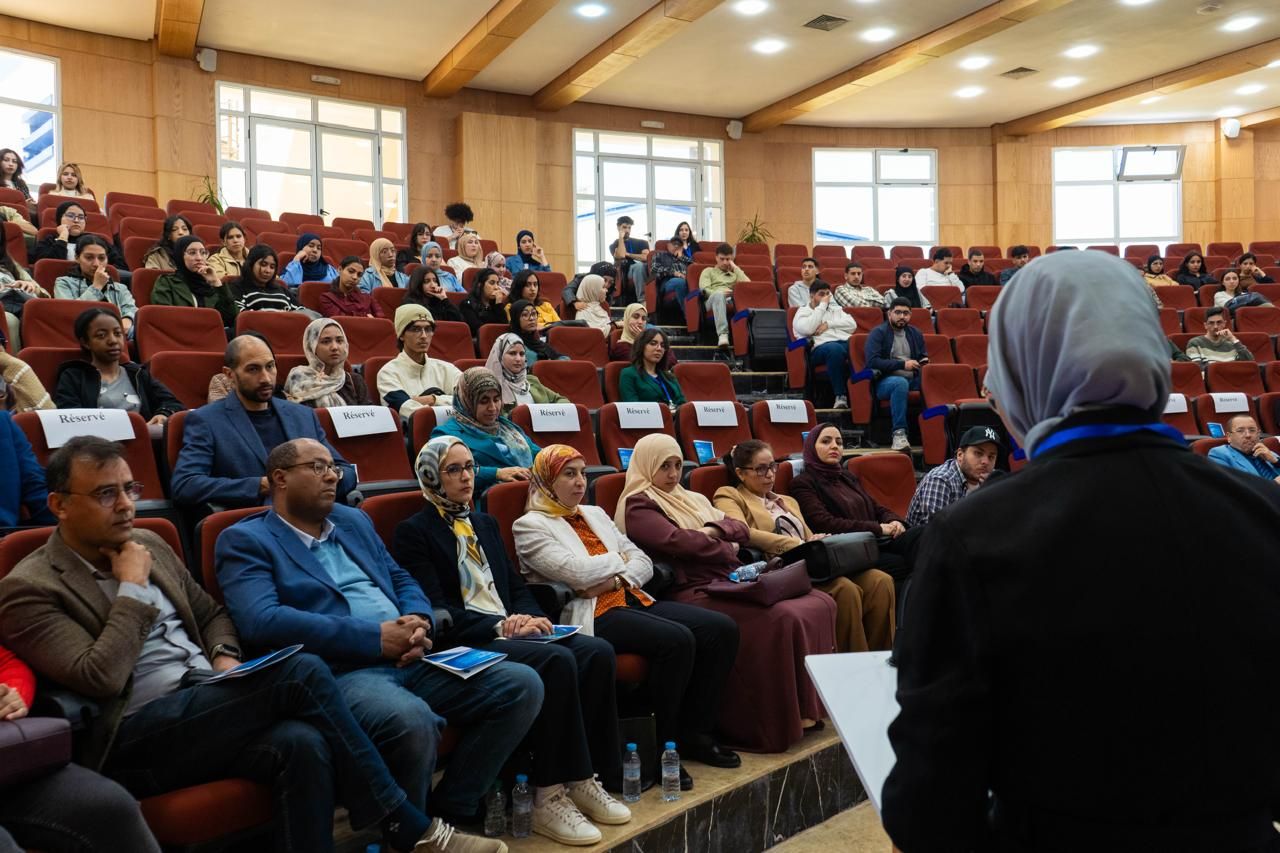
Buildings are more than spaces where energy is consumed. The way they are designed, built, and managed shapes their energy performance and places the construction sector within the wider discussion on energy transition. On 15 April 2026, the National School of Applied Sciences of Ibn Tofail University hosted the international conference “Buildings at the Heart of the Energy Transition: Innovation and Sustainable Solutions.” Organized by the Smart & Energetic Buildings (SEB) Club, the event brought together engineering students, teacher-researchers, researchers, experts, and professionals from the building and construction sector.
The conference examined the building from complementary regulatory, material, and technological perspectives. Discussions addressed current challenges facing the construction sector and explored how thermal requirements, construction materials and emerging technologies can contribute to more sustainable buildings. Members of the organizing team also highlighted the relationship between thermal regulation and technical innovation, including discussions on local traditional materials, artificial intelligence and circular-economy principles.
The gap between regulation and practice formed part of this discussion. Mohamed El Haddadi, CEO of G3 Engineering, presented Morocco’s Thermal Regulation for Construction (RTCM) and drew attention to practical limitations that can arise during its implementation. His intervention connected the objectives established through thermal regulation with realities encountered in the field, giving students insight into how energy-performance requirements move from regulatory frameworks to professional practice.
Artificial intelligence introduced another dimension. Dr. Khuloud Ali, Professor of Architecture and Sustainability, presented “Teaching and Designing Intelligent Buildings: Scaling AI from Home-Level Decisions to Algorithmic Sustainability.” Her contribution explored the role of AI in intelligent buildings, energy-efficient design and sustainability-oriented decision-making. Together, these perspectives showed students that the energy performance of buildings cannot be approached through a single solution, but through interactions between regulation, materials, design and emerging technologies.
The conference welcomed Abdellatif Imad, Ibrahym Dachraoui, Ahmed Ben El Arroubia, Luis Arleo, Khaled Mnaouer, Mohamed El Haddadi and Khuloud Ali, bringing different academic and professional perspectives into the same discussion. Their participation created a direct exchange between engineering education and professional practice, allowing students to engage with specialists working on different dimensions of the built environment.
Students were also active contributors to the event. Members of the SEB Club participated in its organization, with the guidance and support of Prof. Redouane Mghaiouini, who also helped facilitate connections with participating professionals. Organizing the conference therefore added another layer to the learning experience: students were not only recipients of knowledge but also helped create a space for scientific dialogue and professional interaction within their school.
The value of the conference was reflected in this encounter between different perspectives. Student organizers described the experience as an opportunity to broaden their understanding of engineering challenges, develop critical reflection, and learn from professionals with different areas of expertise. Instead of treating energy transition as an isolated technical concept, the discussions connected it with decisions about regulation, materials, technology and building design.
By bringing students, researchers and professionals together around a shared challenge, the initiative strengthened the connection between engineering education, professional practice and sustainable development. More importantly, it encouraged future engineers to look at buildings not simply as structures to be constructed, but as systems whose design, materials, regulation and technologies all influence how they respond to evolving energy and environmental needs.