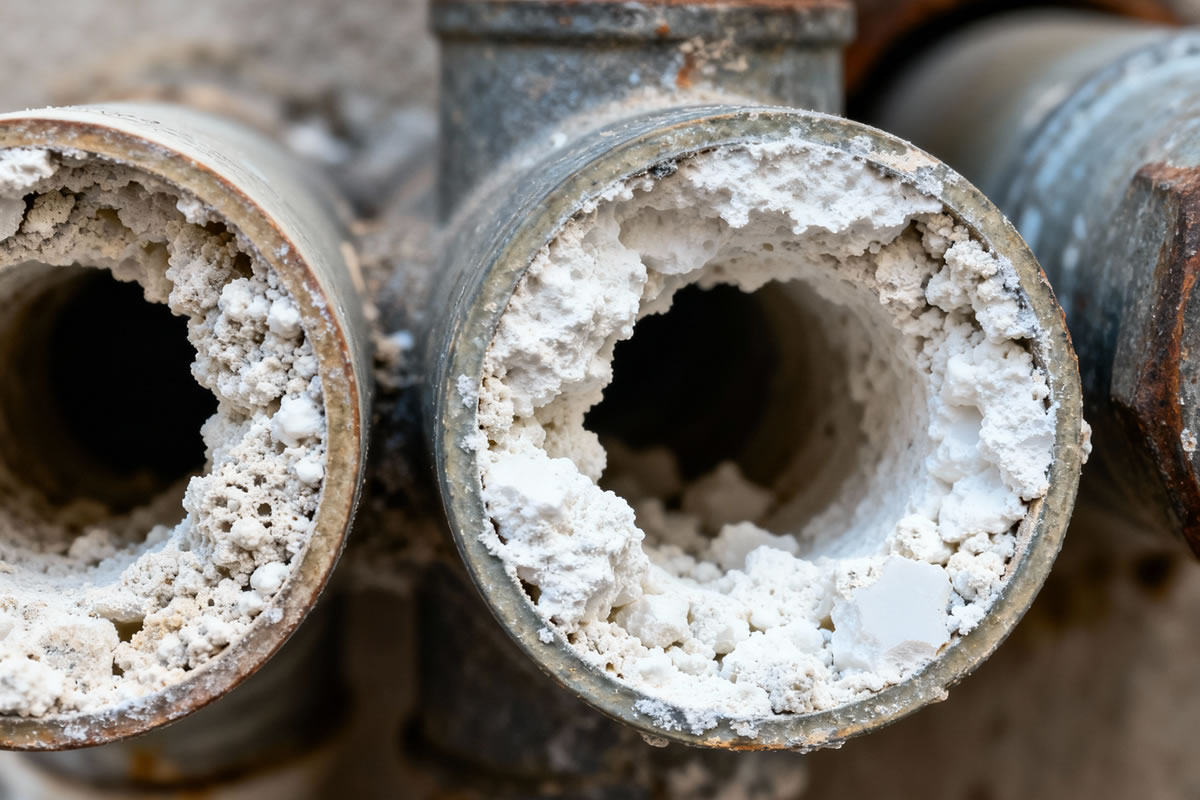
In groundwater-based water supply systems, scaling is often an invisible threat. It develops gradually inside pipes and equipment, reducing hydraulic performance, increasing maintenance needs, and accelerating infrastructure degradation. This phenomenon is mainly linked to the precipitation of calcium carbonate (CaCO₃), driven by the calco-carbonic equilibrium.
To respond to this challenge, Ibn Tofail University, in partnership with ONEE, developed a structured approach that combines scientific diagnosis, experimental validation, and techno-economic comparison. The objective was not only to understand scaling behaviour, but also to identify treatment pathways that are technically effective, economically feasible, and better adapted to local groundwater conditions.
Phase 1: From Diagnosis to Predictive Decision-Making
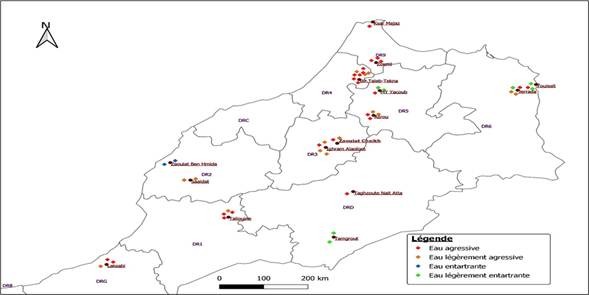
The first phase focused on analysing and anticipating scaling behaviour across multiple groundwater systems. Using established evaluation methods—the Langelier Saturation Index (LSI) and the Legrand–Poirier graphical model—the project assessed the scaling potential of groundwater at a national scale.
- Scope: 47 wells and boreholes across 15 regional centres.
- Findings: Significant variability between sites, including scaling, slightly scaling, and aggressive waters.
- Impact: Identification of critical areas such as Bir Taleb and Ighram Laalam.
Rather than applying a uniform solution, this phase enabled a site-specific decision-making approach, allowing operators to anticipate risks and optimise treatment strategies before scaling becomes operationally critical.
Technology Selection & Pilot Investigation
Following the diagnosis, a techno-economic screening was conducted to identify treatment technologies capable of restoring calco-carbonic equilibrium. Three technologies were selected for pilot-scale investigation:
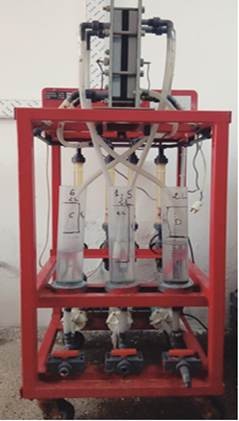
- Electrodialysis (ED)
- Nanofiltration (NF)
- Catalytic Decarbonation
Phase 2: Testing Solutions Under Real Conditions
To move from analysis to action, the three treatment technologies were tested using pilot systems under real operating conditions:
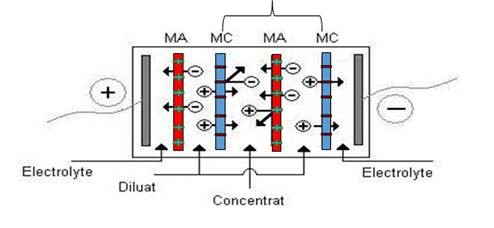
Electrodialysis (ED)
Electrodialysis demonstrated stable and reliable performance, allowing precise control of mineral content and effective adjustment toward calco-carbonic equilibrium.
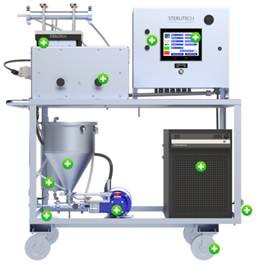
Nanofiltration (NF)
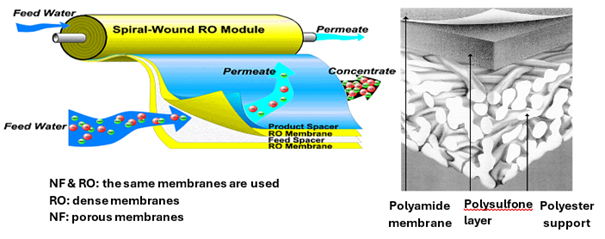
Nanofiltration proved highly effective in reducing hardness. However, achieving chemical balance required an additional step of controlled blending with raw water to avoid producing aggressive water.
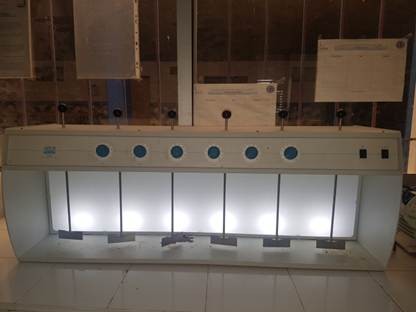
Catalytic Decarbonation
Catalytic decarbonation was explored as an alternative approach based on calcium precipitation. Experimental trials highlighted its potential, particularly in terms of simplicity and cost. However, under the tested conditions, the results were not fully conclusive, indicating the need for further optimisation of operational parameters.
Environmental Perspective: Towards Low-Waste Water Treatment
A key contribution of this project lies in rethinking how treatment by-products are managed. Unlike conventional methods that generate liquid sludge, catalytic decarbonation produces solid mineral particles, which are easier to handle and manage.
These materials present potential opportunities for valorisation, particularly in industrial or agricultural applications, opening the way toward more resource-efficient and low-waste systems. This perspective reflects an important shift—from waste management to resource recovery, aligned with circular economy principles.
Techno-Economic Performance: Sustainability Meets Feasibility
A comparative techno-economic analysis, based on the Bir Taleb case study, confirmed the feasibility of the proposed solutions:
- Catalytic Decarbonation: 1.04 DH/m³
- Nanofiltration: 1.08 DH/m³
- Electrodialysis: 1.27 DH/m³
While electrodialysis and nanofiltration demonstrated strong technical reliability, catalytic decarbonation showed the lowest production cost, highlighting its potential as a cost-effective alternative pending further validation.
Knowledge Transfer: From Research Results to Field Decisions
The project also included training and awareness activities designed to transfer scientific results to technical teams. These activities helped bridge the gap between laboratory findings and field decision-making by strengthening the ability of engineers and technicians to understand scaling risks, interpret water-quality indicators and use scientific evidence in operational planning.
Conclusion
This project shows that water scaling is not only a technical problem to be corrected after damage occurs. It can be addressed through a more proactive strategy that combines diagnosis, treatment selection, experimental validation, and sustainability thinking.
By linking scientific understanding with field application, the collaboration between Ibn Tofail University and ONEE contributes to more reliable groundwater-based water supply systems and opens the door to future low-waste, potentially circular treatment pathways.