
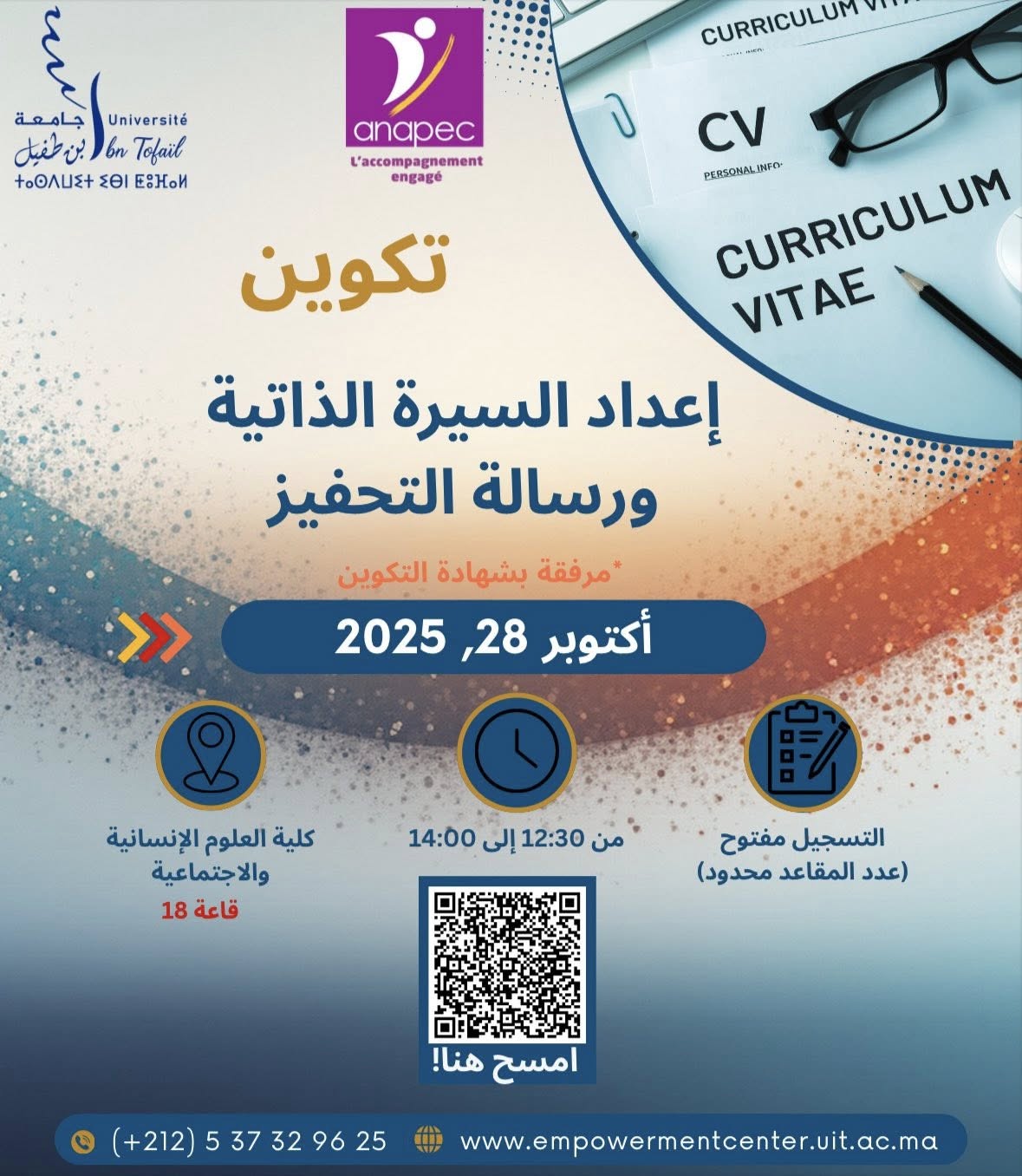
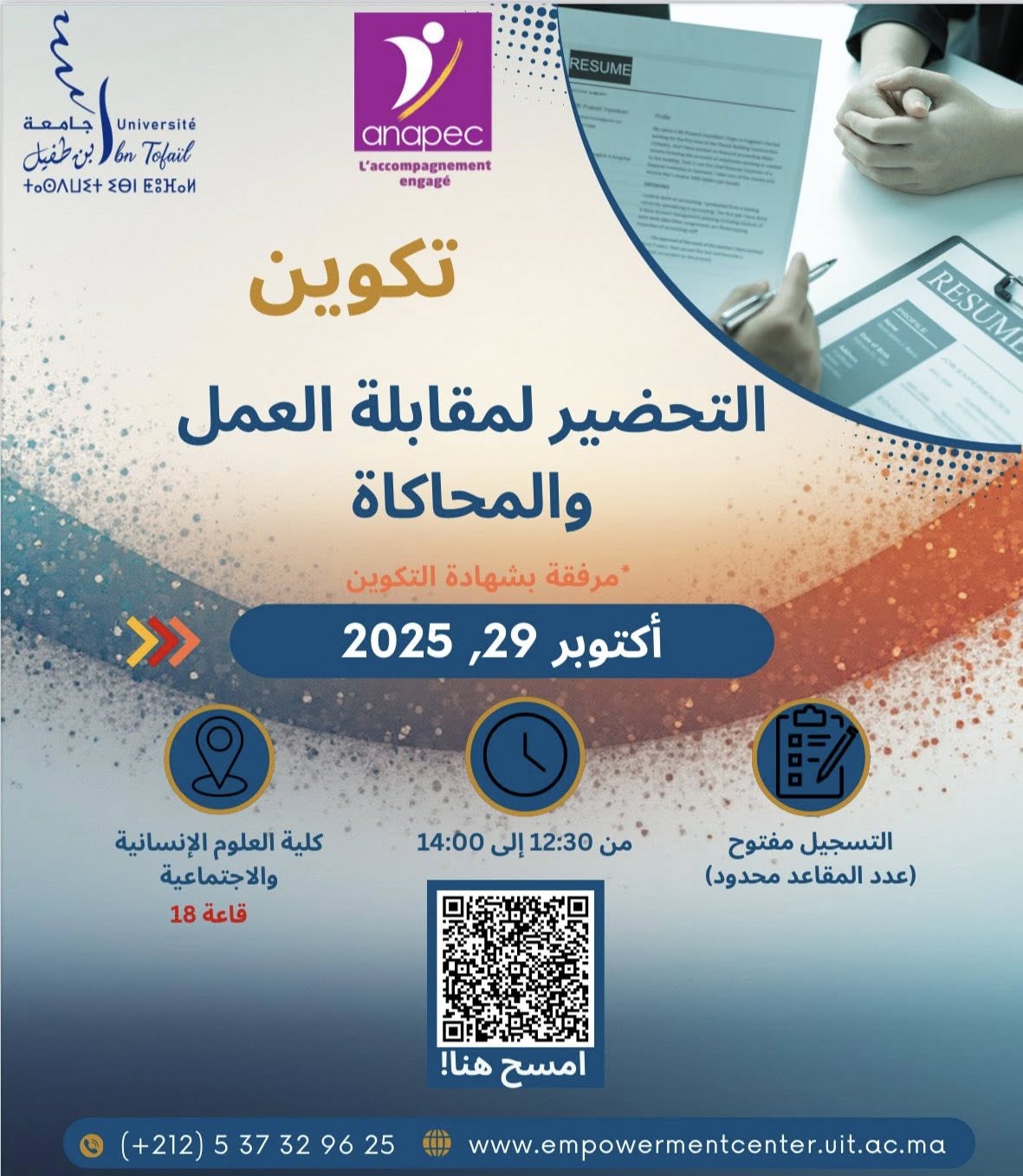
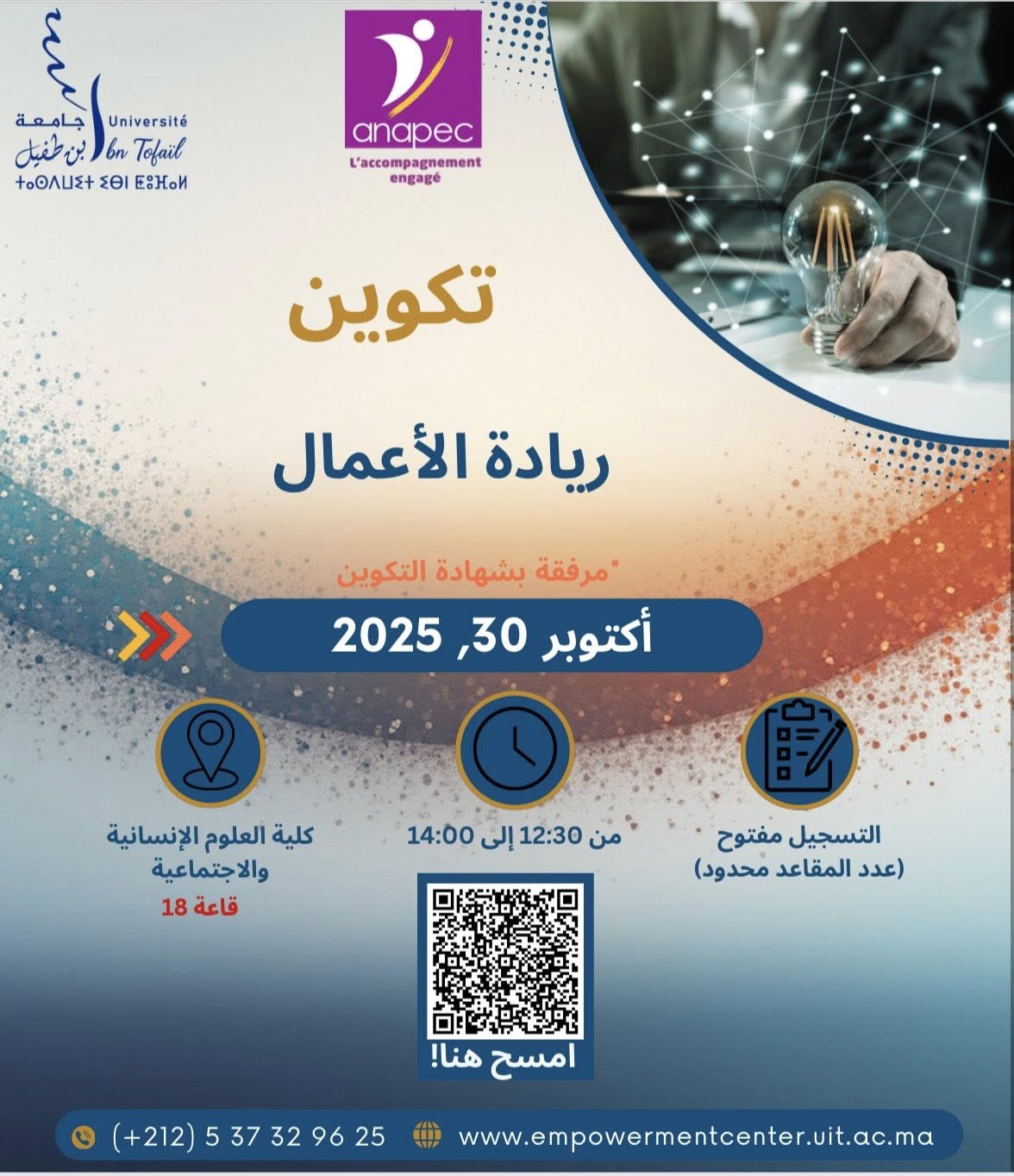
Event: 28 – 30 October, 2025
The organization of professional preparation workshops at Ibn Tofail University reflects a growing institutional commitment to enhancing graduate employability and strengthening the link between higher education and the labor market. In a context characterized by rapid economic transformation and increasing competition for employment, universities are expected not only to provide academic knowledge but also to equip students with practical and transferable skills that facilitate their professional integration.
Held at the Faculty of Humanities and Social Sciences (FSHS) in partnership with the National Agency for the Promotion of Employment and Skills (ANAPEC), these workshops address key stages of the job-seeking process. The program includes training on writing an effective curriculum vitae and cover letter, preparing for job interviews through simulations, and introducing students to the fundamentals of entrepreneurship. By combining theoretical guidance with practical exercises, the sessions aim to improve students’ self-presentation, communication abilities, and understanding of professional expectations.
The collaboration between the university and ANAPEC illustrates the importance of multi-stakeholder partnerships in responding to employment challenges. Such cooperation allows students to benefit from the expertise of labor market professionals and to gain insights into current recruitment practices. Moreover, the provision of a training certificate at the end of the program contributes to recognizing students’ engagement and enhancing their professional profiles.
From a broader perspective, this initiative is closely aligned with the United Nations Sustainable Development Goals, particularly Quality Education and Decent Work and Economic Growth. By promoting skills development, lifelong learning opportunities, and youth employability, the workshops support inclusive and equitable education while facilitating access to decent work. In this sense, the event represents a concrete contribution to sustainable development by empowering students to actively participate in economic growth and by reinforcing the social responsibility of higher education institutions.