Event : 31 March, 2026
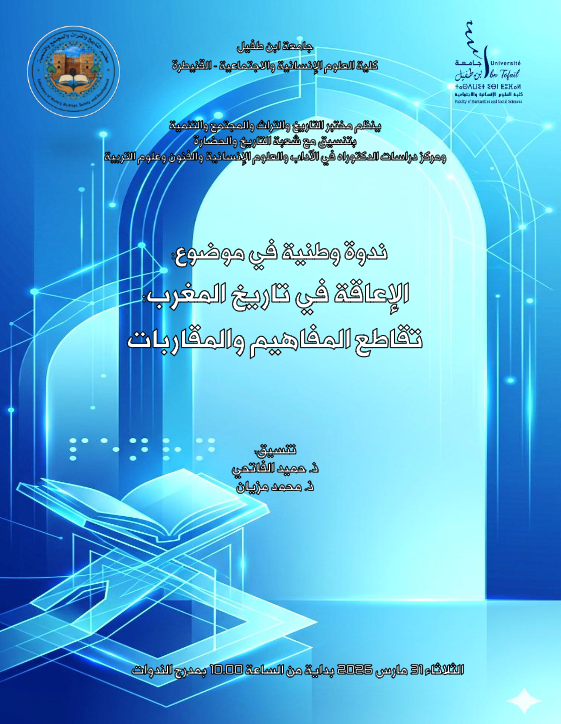
On 31 March 2026, the Faculty of Human and Social Sciences at Ibn Tofail University, Kenitra, organized a national conference on “Disability in Moroccan History: Intersections of Concepts and Approaches.” The event was organized by the Laboratory of History, Heritage, Society and Development, in coordination with the Civilization Department and the Doctoral Studies Center in Arts, Humanities, Arts, and Educational Sciences, and was held at the Conference Hall.
The conference provided an academic and interdisciplinary space for examining disability within the history and social development of Morocco. It brought together researchers and members of the university community to discuss the evolution of concepts, representations, and approaches related to disability, while highlighting the importance of understanding disability within its broader historical, cultural, and social contexts.
The programme featured two academic sessions. The first, entitled “Disability in Moroccan History: Conceptualization and Etymological Foundations,” examined the historical development of concepts and terminology associated with disability and their evolution across different periods. The second session, “Historical Extensions and Intersections with the Humanities and Social Sciences,” explored disability through complementary perspectives from history, the humanities, and the social sciences.
A central dimension of the conference was the promotion of inclusion and the recognition of diversity. By addressing disability as a historical and social issue rather than solely from an individual perspective, the event encouraged reflection on the ways societies have perceived, represented, and integrated persons with disabilities. Such academic discussions can contribute to challenging exclusionary representations and supporting more inclusive approaches in education, research, and society.
The conference directly supports the United Nations Sustainable Development Goals (SDGs), particularly Reduced Inequalities, by fostering discussion on disability, social inclusion, equal participation, and the reduction of barriers affecting persons with disabilities. Its focus on understanding disability within historical and social contexts also contributes to greater awareness of the structural and cultural dimensions of inequality.
The event further supports Quality Education by promoting inclusive and equitable learning environments and encouraging interdisciplinary knowledge production. By creating a space for researchers and students to engage with questions of disability and inclusion, the conference contributes to broadening academic perspectives and promoting education that recognizes diversity.
The conference also aligns with Peace, Justice and Strong Institutions, particularly through its emphasis on dialogue, social participation, and the development of knowledge addressing issues of equality and inclusion. In addition, its interdisciplinary and collaborative nature reflects Partnerships for the Goals, demonstrating the value of cooperation among university laboratories, academic departments, and doctoral education structures in addressing complex societal issues.
Through this initiative, Ibn Tofail University reaffirmed the role of higher education and research in promoting inclusive knowledge, social awareness, and equal participation, while contributing to the broader implementation of the Sustainable Development Goals and the development of a more inclusive society.